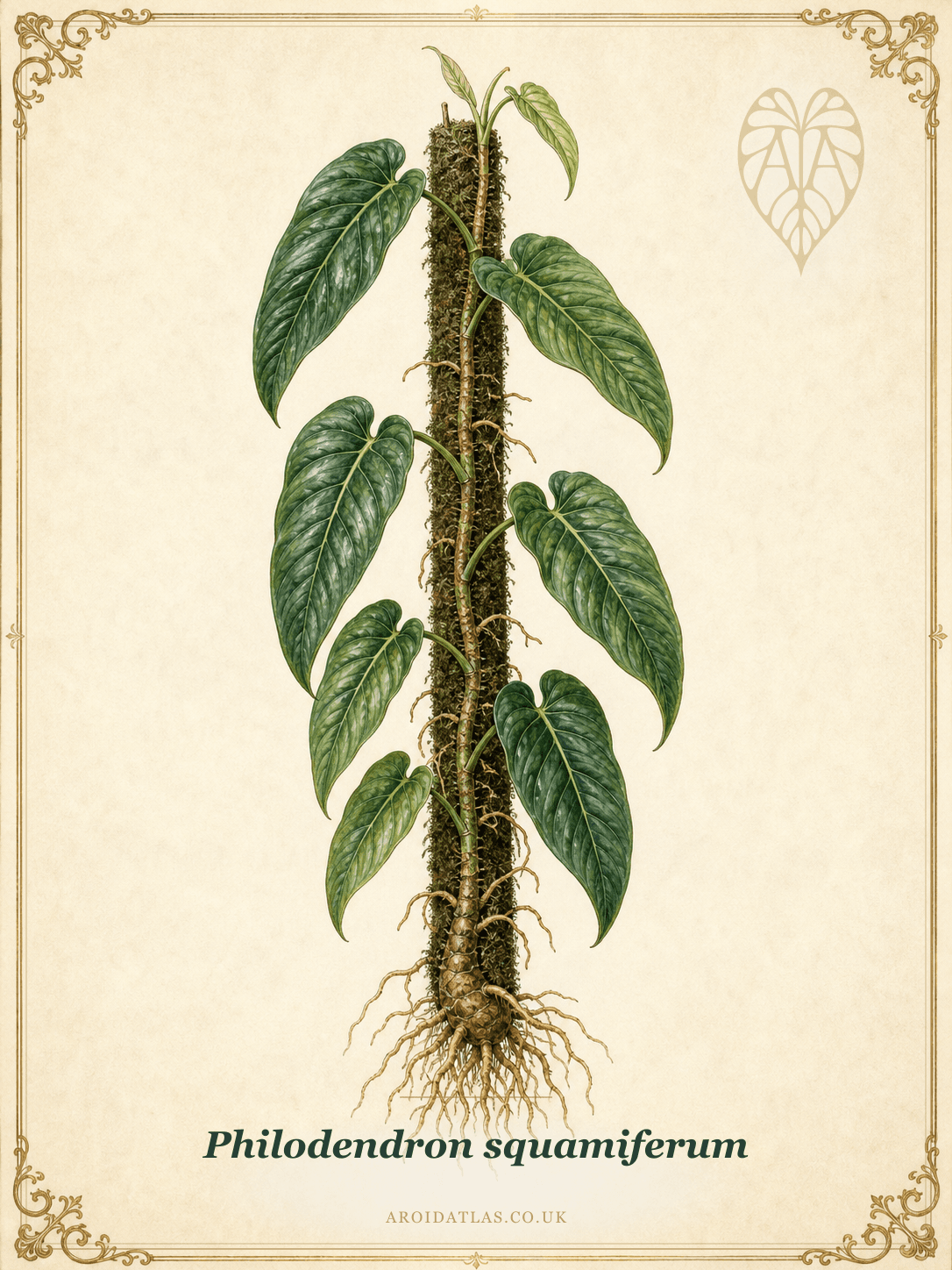
Full Specimen Plate
Philodendron squamiferum
Red Bristle Philodendron
Quick Facts
Aroid Atlas Price Guide
Community estimate — limited market data
See full auction data ↓Morphology
About
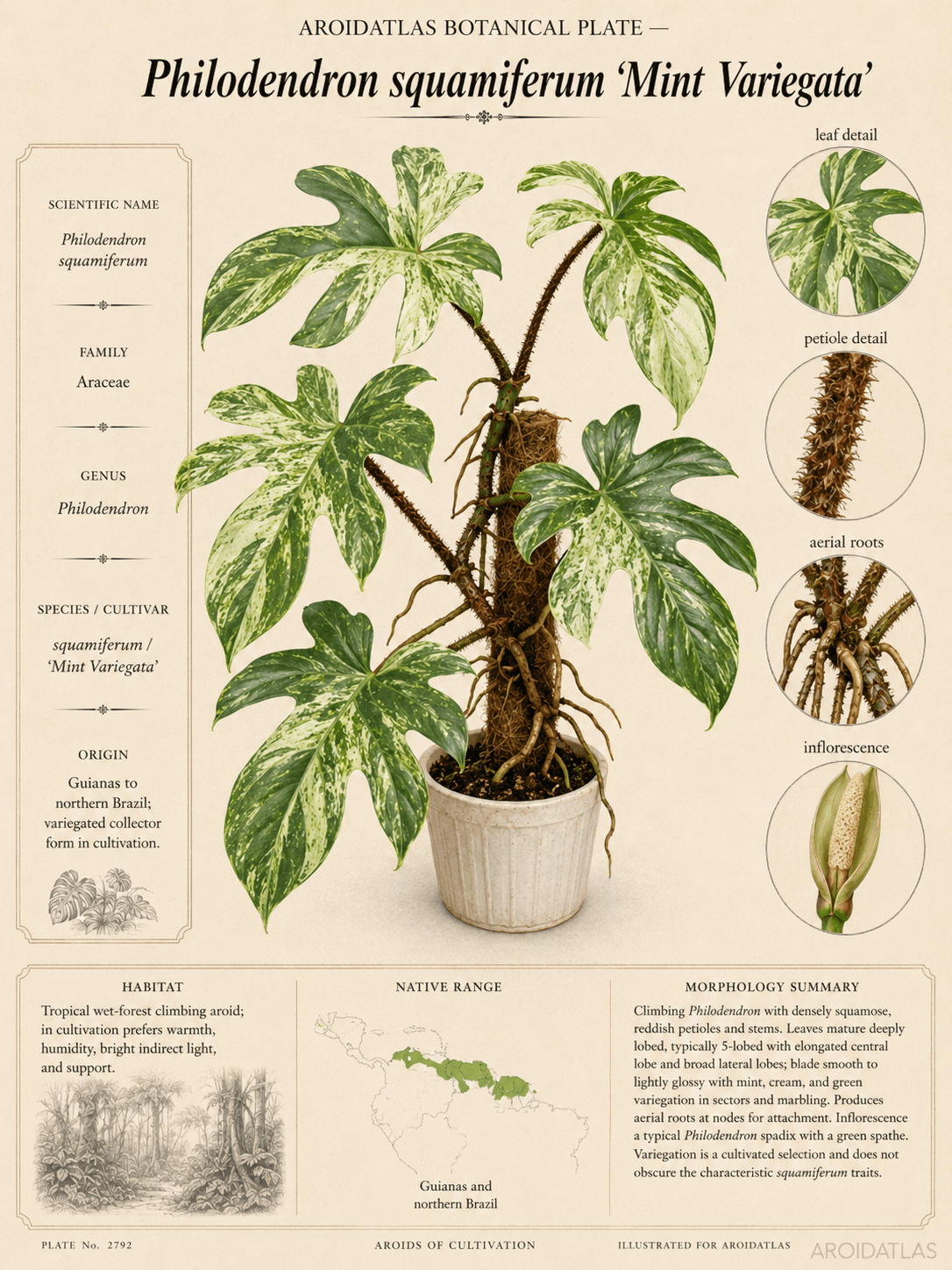
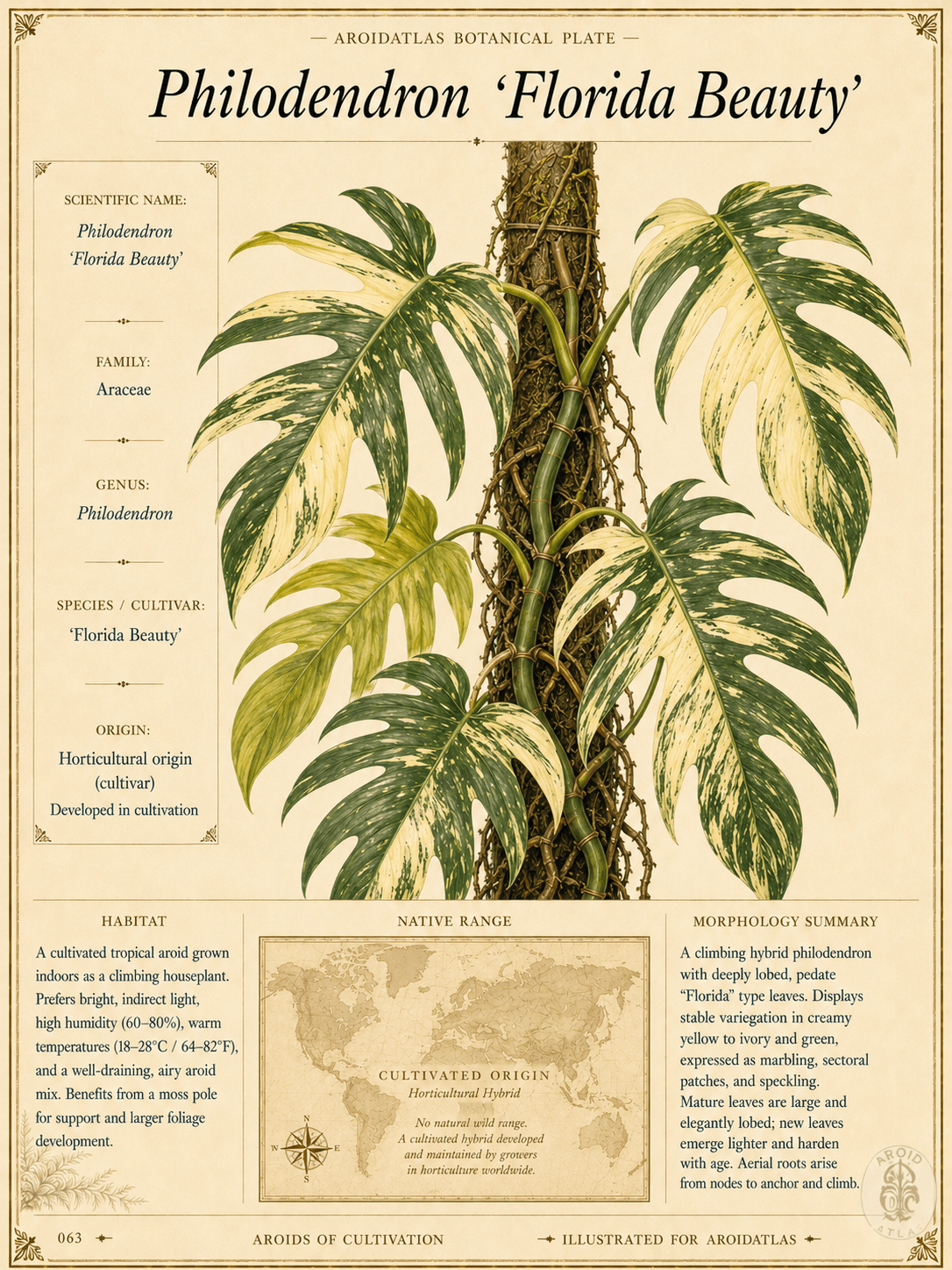
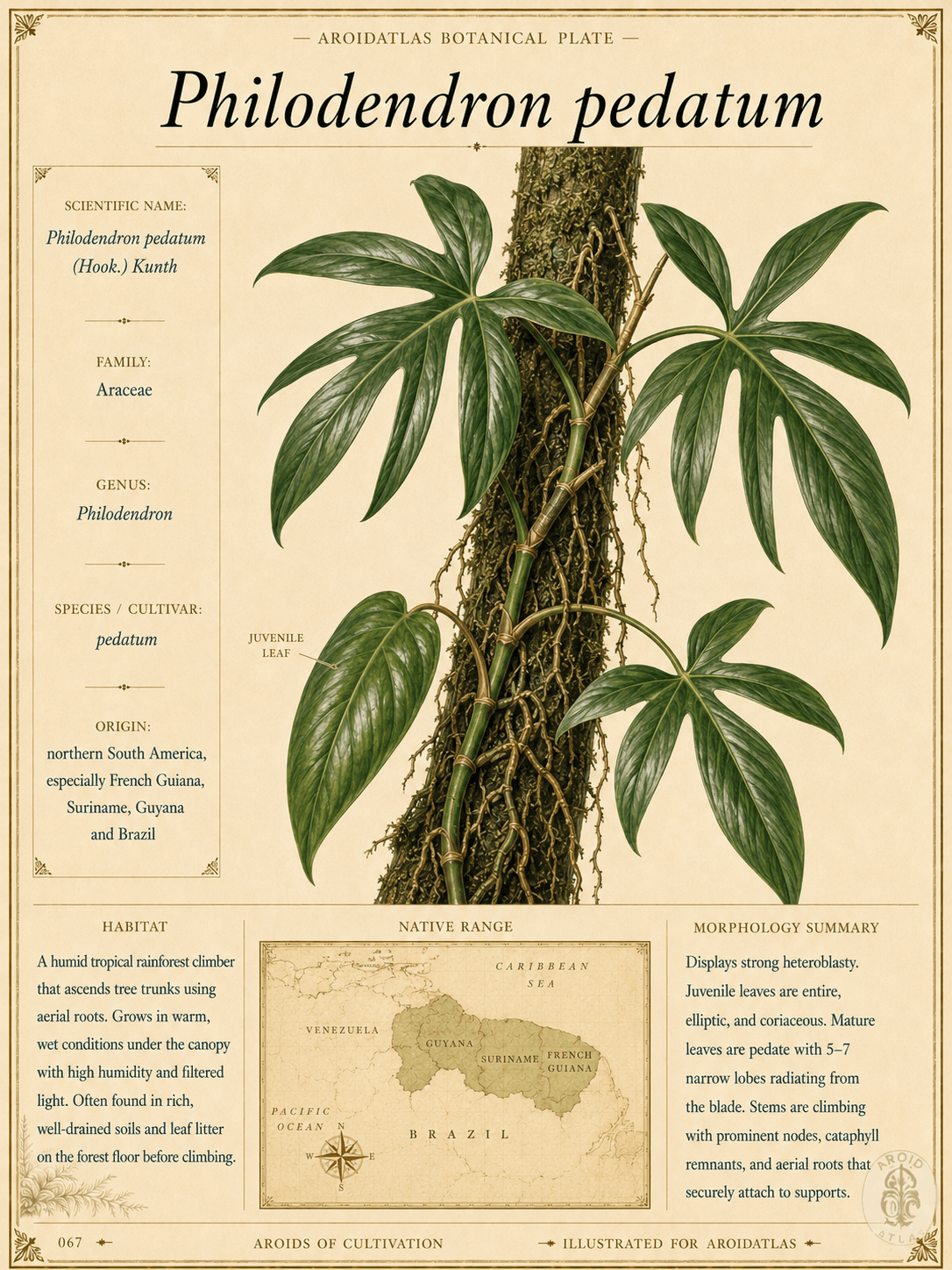
Philodendron squamiferum is a distinctive climbing aroid from the Guianas and northern Brazil, instantly recognisable by the soft reddish bristle-like hairs ("squamae") covering its petioles — a texture unlike almost any other commonly grown Philodendron. Mature leaves are deeply five-lobed, giving the plant a hand-like silhouette quite different from the plain heart-shaped juvenile leaves it starts with. The species is one half of the parentage behind the famous 'Florida' hybrid line (crossed with Philodendron pedatum by breeder Robert McColley in 1950s Florida), which produced 'Florida Beauty' and its paler sport 'Florida Ghost' — both of which additionally carry a stable cream-yellow sectoral variegation not present in the plain species.
Native Range
Brazil
Collector Popularity Review
Aroid Atlas Collector Review: Philodendron squamiferum (Red Bristle Philodendron) is ranked as Uncommon rarity on the market. Rating is calculated based on overall cultivation difficulty, aesthetic appeal, and search popularity among active collectors.
Market Analysis
Auction History & Retail Data
Historical eBay auction metrics and live retailer listings updated weekly.
No eBay auction history available yet. Data is collected automatically as sales appear on eBay UK.
Before You Buy
Species-specific things to check when evaluating a listing
- Check for the characteristic reddish bristly texture on the petioles — this is the species' most distinctive and easily verified feature
- Mature, lobed leaves command a premium over juvenile heart-shaped growth — confirm which stage you're buying
- For 'Mint Variegated', check the variegation pattern in photos matches the named form
- All Philodendron are toxic if ingested — keep away from pets and children
Propagation Guide
Growing More Plants
6-10 weeks
Cultivar character is preserved through vegetative cuttings
Roots from stem or node cuttings, ideally with the distinctive bristly petiole texture visible on the cutting. Slower to establish than common Philodendron species.
Care Guide
Growing Conditions
Chunky, well-draining aroid mix: 40% orchid bark, 30% potting compost, 20% perlite, 10% sphagnum moss.
Allow the top few centimetres of substrate to dry between waterings.
60-80% for best leaf size and lobing; tolerates lower humidity with smaller, less deeply lobed leaves.
Balanced liquid fertiliser at half strength every 3-4 weeks during the growing season.
Every 12-18 months, or when roots fill the pot.
Common Problems
Leaves stay heart-shaped, never lobe
Juvenile growth phase, or insufficient light/support to trigger mature foliage
Provide a moss pole and bright indirect light — lobed mature leaves develop once the plant is established and climbing
Root rot
Overwatering or poor drainage
Repot into fresh chunky substrate and reduce watering frequency
Spider mites
Low humidity, especially indoors over winter
Increase humidity and treat with insecticidal soap at first sign of stippling